

Whoa!
I keep getting pulled into Solana’s explorer tools like solscan.
They surface transactions fast and show NFT mint details clearly.
Initially I thought explorers were interchangeable, but then I noticed subtle UX choices and data filters that actually change how quickly I find mint addresses and token holders.
This matters when you’re chasing a drop or tracking a rug.
Seriously?
Solscan’s layout hits a sweet spot between speed and depth.
I use it daily to peek at token transfers and program logs.
On one hand the search is forgiving and autocorrects common address typos, though actually the advanced filters are where power users dig into historical state and inner instruction decoding which is neat.
My instinct said it would be cluttered, but it stays clean.
Hmm…
Something felt off about other explorers’ NFT tracker accuracy and updates.
The NFT pages often lack metadata refresh or show stale images.
Actually, wait—let me rephrase that: some services lag on off-chain metadata, and because Solana relies on external hosts for many art files the tracker must poll multiple sources and cache intelligently to remain reliable.
Solscan’s NFT tracker does this with sensible fallbacks and clear provenance.
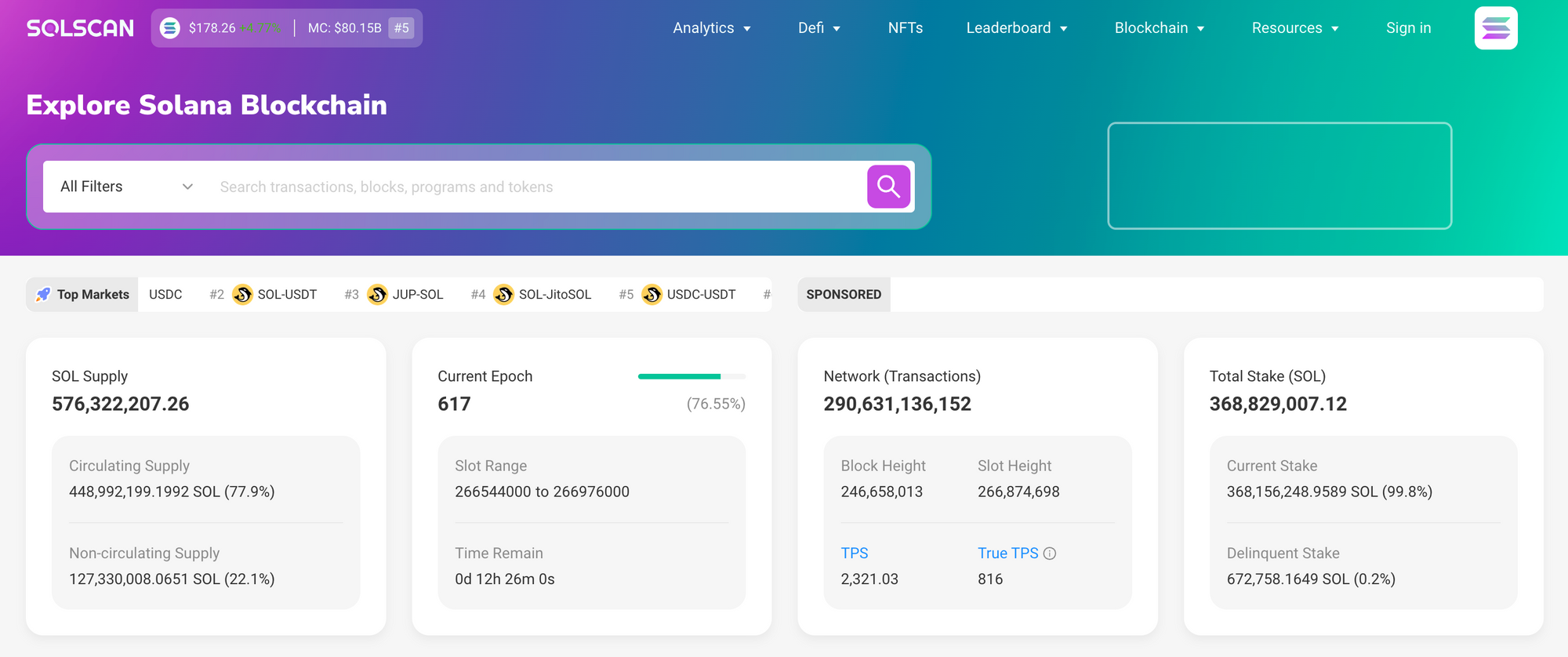
Here’s the thing.
You want instant ownership, royalty splits, and verified collection badges.
Solscan surfaces on-chain royalties and links to the creators when available.
If you’re auditing an expensive buy or trying to detect wash trading patterns, the combination of token holder timelines, transfer graphs, and
Why solscan Became My Go-To Solana Explorer (and How I Track NFTs Without Losing My Mind)
Okay, so check this out—I’ve been poking around Solana explorers for years now. Wow! My first impression was messy and noisy. Medium tools felt disjointed and sometimes incomplete. Over time I kept coming back to somethin’ that made sense even at 2 AM when my brain was fuzzy and I needed quick answers.
Whoa! At first the UI hit me as refreshingly straightforward. Really? I mean, clean tables and clear transaction timelines. Then I started testing edge cases, like obscure token mints and weird program logs that only show up on-chain. Initially I thought a lot of explorers would show the same data, but then realized that few actually made the NFT lineage and holder flows readable for humans—and that matters when you’re troubleshooting or proving provenance.
Here’s the thing. My instinct said the explorer that surfaces program logs wins. Hmm… I was biased, sure. I’m a dev and a trader, and I lean toward tools that don’t hide the gritty bits. On one hand you want polished UX; on the other hand you need transparency, and solscan tends to strike that balance pretty well. Actually, wait—let me rephrase that: it’s not perfect, though it gets the basics right more often than not.
Really? Tracking NFTs on Solana used to feel like detective work. Wow! You’d juggle multiple tabs and pray the metadata URI wasn’t broken. Medium complexity came from varied metadata standards and off-chain hosts that go down. Longer chains of ownership, program-derived addresses, and royalty logic sometimes require deeper dives, but the explorer’s transaction-level views make it possible, if you’re patient and willing to read logs.
Okay, so here’s a quick example from my own run: I followed an NFT transfer where the royalty looked missing, and I dug through the inner instructions to find the marketplace program actually routed funds off-chain. Wow! I scribbled notes and felt oddly proud. The point is that solscan’s parser of inner instructions and decoded logs saved me time. On reflection, that kind of visibility is what separates a casual lookup from proper forensic work, though sometimes the parsing isn’t perfect and you have to piece things together.
Practical tips for using solscan as your NFT tracker
First, bookmark the page patterns you use. Really? You won’t regret it. Save the token mint view, the account history, and the program logs you inspect frequently. Most explorers let you search by wallet, tx, or mint, but solscan layers decoded instruction views on top which helps when marketplaces obfuscate flows.
Wow! Use the mint page as your canonical NFT record. The mint page ties metadata to creators and shows spl-token activity. It’ll show transfer history and holder snapshots too, and that quick view helps spot fake airdrops or duplicate mints. When metadata URIs are missing, follow the creators array and on-chain references because sometimes the off-chain JSON is gone but on-chain authorizations still tell the story.
Hmm… One trick I use is cross-referencing holder lists with verified creators. Wow! That helps spot wash trading and suspicious clusters. The token holder snapshots are great for a quick sense of distribution, but for longitudinal analysis you need to export and crunch data, which solscan supports via CSV from certain views. On the other hand, the CSV headers can be inconsistent sometimes, and you’ll have to normalize fields—annoying but manageable.
Initially I thought batch analysis would require paid APIs. Actually, wait—let me rephrase that—most basic batch exports are available if you dig into the UI. That said, for large-scale scraping or continuous monitoring you’ll want the official APIs or a custom node stream. My recommendation is to start small: export a few holder lists, compare them in a spreadsheet, and see what sticks.
Seriously? Alerts are underrated. Wow! Set up RSS or webhook-style monitors if the explorer supports it, or tie CSV exports into a lightweight script that checks for new holders or sudden price changes. This is crucial if you manage a project treasury or curate collections. The last time my collectors alerted me via a webhook, we caught a rug attempt early, and that saved reputations and money.
On one hand you have explorer features; on the other hand you sometimes need raw RPC data. My slow, deliberate thinking says use both. For quick human-facing queries, solscan’s web UI is excellent. For programmatic needs, pair it with a node provider and a small parser to reconstruct inner instruction flows more reliably. There’s no single silver bullet here, though; it’s about using the right tool for the question.
Here’s the thing. The explorer you pick will shape how you reason about incidents. Wow! If your tool hides inner instructions, you’ll miss a lot. If it decodes and surfaces them, you can trace funds, royalties, and program logic much faster. I found that learning the program IDs for major marketplaces and cross-checking those IDs in transaction logs speeds up investigations considerably.
Hmm… I keep a cheat sheet of common marketplace programs, dev wallets, and a few curious corner cases. Really? That cheat sheet lives in a plain text file on my desktop. It’s low-tech, but it works. Also, I’m not 100% sure my list is exhaustive, and that’s okay. There’s always a new marketplace or a fork that changes the landscape, and you adapt—you have to.
Now, if you’re looking for a single place to start and want a clean UX plus decent forensic tools, try this: use solscan for quick checks and then pair it with RPC logs for deeper audits. Wow! That combo covers both human-friendly views and raw data. My instinct is that most users will be satisfied with that flow, though power users and devs will want more automation and durability.
I’m biased toward transparency, and here’s what bugs me about some explorers. Wow! They either oversimplify or overwhelm. Too much simplified UI hides nuance, and too much raw data overwhelms. A human-centered explorer, in my view, threads the needle: give readable defaults, but let power users expand into raw logs and inner instructions.
On the technical side, pay attention to how the explorer indexes data. Initially I thought indexing was trivial, but then I realized differences in indexing cadence affect forensic timelines. Longer indexing delays can make it look like a transaction never happened, which is terrifying in the middle of a drama. Actually, wait—let me rephrase that: it’s not usually the explorer’s fault, it’s frequently RPC lag or node sync issues, but it’s presented as the explorer’s problem to the user.
Wow! For developers building on Solana, the explorer is a feedback loop. Medium feedback happens via decoded logs, and deep feedback comes from raw instruction dumps. Every time I deploy or interact with a program, I check the instruction decoding to ensure my CPI chains behaved correctly. Sometimes they don’t and the logs save the day; sometimes they do and I breathe easier.
Now for some practical caveats. Hmm… Not every NFT project follows the same metadata pattern. Wow! Some use Metaplex standards; others roll custom schemas or store data with third-party hosts. You will hit broken URIs, expired image hosts, and diverging creator arrays. Long-term archiving of metadata is still a problem for the ecosystem, and explorers are only one layer of the solution.
I’ll be honest—tracking provenance sometimes requires detective work across several tools. Wow! Export CSVs, check program logs, compare signatures, and, if needed, reach out to creators. I’m not 100% sure you’ll always get a tidy answer, but you can triangulate a lot of facts. That feels empowering if you’re curating or moderating a marketplace.
FAQ
How do I verify an NFT’s creator on Solana?
Check the mint page for verified creators and creator verification flags. Wow! Also inspect the transaction that minted the token and look at the signers and program logs. Medium approach: cross-check on-chain creator arrays with marketplace listings. If things don’t line up, dig into the inner instructions to see if the mint authority transferred or if an update authority changed metadata. Long answer: provenance is a mix of on-chain facts and off-chain confirmations, so use the explorer as step one in a chain of verification.
Can I monitor NFTs for wallet sales or transfers?
Yes. Use holder snapshots and account history exports for periodic checks. Wow! For real-time monitoring, combine webhook alerts with light RPC polling. On the other hand, very high-frequency monitoring requires a dedicated node and stream processing to avoid rate limits. I’m biased toward building small scripts that alert on big changes and ignore the noise—keeps things manageable.
Alright, last thought and I’m done. Really? Tools evolve fast in crypto. Wow! solscan has been practical and human-friendly for many of my use cases, but no explorer is perfect. I favor those that show the dirty inner bits without making me dig for hours. My gut said that transparency beats prettiness, and after using solscan heavily I still agree.
So, try the explorer, play with holder exports, subscribe to alerts if you can, and keep a personal cheat sheet for common program IDs. Wow! You’ll catch more oddities and feel less surprised when the market throws curveballs. I’m not promising miracles, but you’ll be better equipped—and that feels good.